Chimney Repair for Delaware Masonry
Water is the enemy. Nearly every chimney repair in New Castle County traces back to it: rain enters through a cracked crown or a missing cap, soaks the masonry, and then Delaware's winter does the demolition — freeze, expand, crack, thaw, repeat, dozens of times a season. Brick faces pop off, mortar joints wash out, and a chimney that looked fine in September sheds a brick onto the lawn in March. The repairs below are the standard fixes, in roughly the order the water damage happens.
- Chimney crown repair. The concrete cap that sheds water off the top of the stack. Cracked crowns get cleaned and sealed with flexible crown coating; crumbled ones get formed and re-poured with proper overhang.
- Repointing / tuckpointing. Deteriorated mortar joints ground out and repacked. On pre-war Wilmington rowhomes, original lime mortar has often been eroding for the better part of a century.
- Spalling brick replacement. Frost-popped brick cut out and matched — color and size — so the repair doesn't advertise itself.
- Flashing repair. The metal transition where chimney meets roof, and one of the most common leak points in any house. Re-sealed or re-fabricated.
- Waterproofing. Vapor-permeable masonry sealer that stops rain absorption without trapping moisture inside the brick.
- Smoke chamber parging. The rough corbelled chamber above the firebox coated smooth with refractory mortar — better draft, and a required fix when the old surface is eroding.
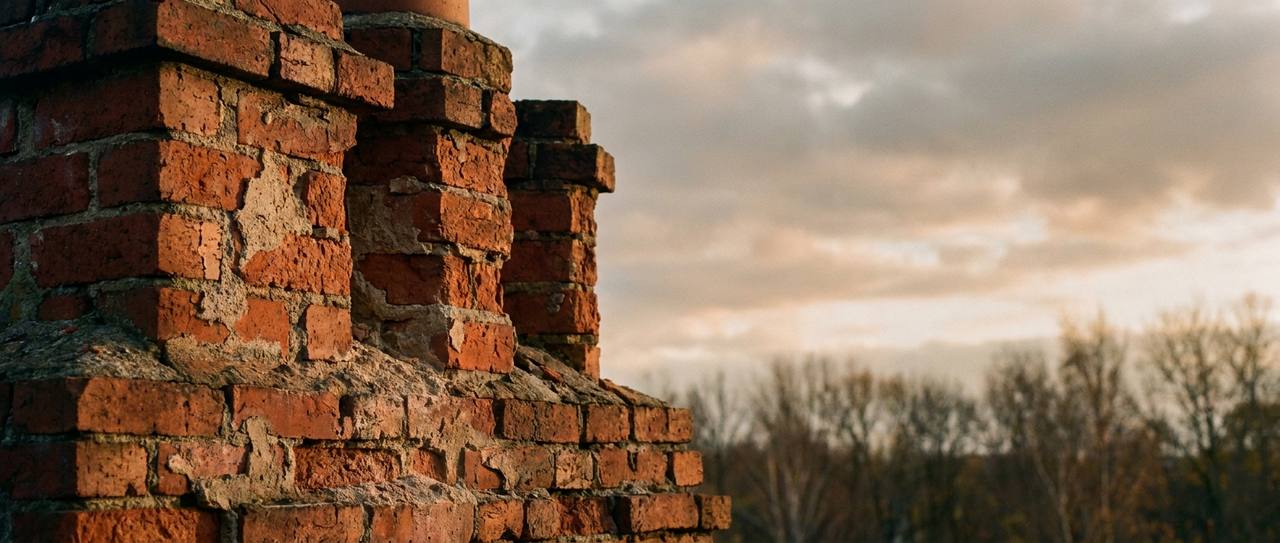
Rowhome Chimneys Are Their Own Trade
Wilmington's older neighborhoods — Trolley Square, Happy Valley, Brandywine Village, the blocks around the Delaware Avenue Historic District — are full of party-wall rowhome chimneys that don't behave like a suburban stack. Many were built for coal and converted later; many serve multiple flues in one stack; some are shared structures with the house next door. The mortar is softer, the brick is older, and the wrong repair (hard modern mortar on soft historic brick, for one) actively damages them. The providers we connect you with have seen the inside of these chimneys before. That matters more here than anywhere else in the county.
Repair Now or Watch It? An Honest Answer
Not every crack is an emergency, and a good chimney company says so. A hairline crown crack sealed this summer is a $300 fix; the same crack ignored for five winters is a rebuilt crown, replaced brick courses, and possibly a new liner where water found the flue. The written assessment you get separates fix-before-burning-season from reseal-next-year — with photos, so you can see exactly what the money is buying. When a chimney genuinely needs nothing, that's the report you get.