Chimney Caps: Small Part, Outsized Job
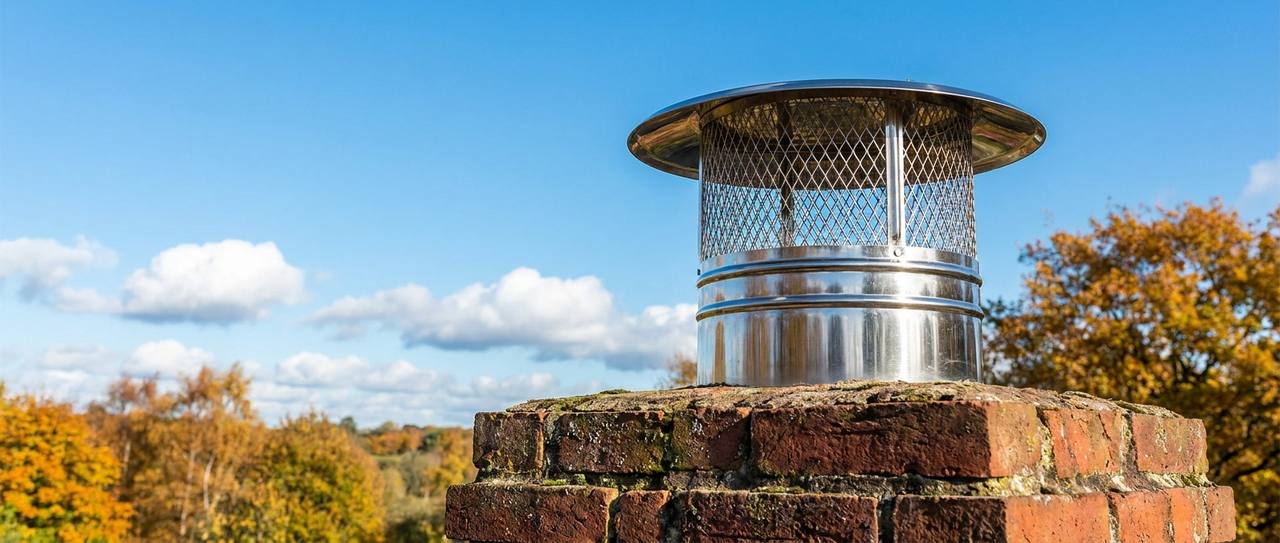
An uncapped chimney is an open hole in your roof — that's the whole story. Rain falls straight down the flue and into the smoke chamber, where it mixes with creosote into an acidic sludge that eats masonry and smells exactly like you'd think. Animals move in. Debris blocks the draft. Embers exit unscreened. A properly fitted stainless cap fixes all of it at once, which is why the first note on so many inspection reports is simply: no cap.
- Single-flue stainless caps — sized and fastened to the tile, with spark screen. The standard fix.
- Multi-flue and custom caps — one cover for stacks with several flues, common on larger and older New Castle County homes.
- Chase covers — the metal lid on framed chimney chases. Rusted galvanized covers get replaced with fabricated stainless.
- Top-sealing dampers — cap and damper in one, gasket-sealed against winter heat loss.
Animal Removal, Done Legally and Humanely
Every spring, New Castle County chimneys fill with tenants. Raccoons — typically a mother who's chosen your flue as a den for her kits — and nesting birds are the usual cases, and each has a right way and a wrong way. The wrong way involves fire, smoke, or a coat hanger, and it ends with dead animals in the flue or a panicked raccoon in your living room. The right way is humane eviction or removal, timed correctly, followed by a full cleaning of the nesting debris (a serious draft blockage and fire hazard) and a cap installation so the vacancy is never re-listed.
One case is special: chimney swifts are federally protected under the Migratory Bird Treaty Act, and active nests cannot legally be disturbed — by anyone. The good news is the nesting window is short. The service that's actually available, and the one we connect you with, schedules the removal and capping for the week the young fledge, and tells you the truth about the wait instead of quietly breaking federal law up your flue.
The Cheapest Insurance on the House
Most of the expensive chimney repairs on this site — spalled brick, washed-out mortar, rusted dampers, rebuilt crowns — begin with water that a cap would have kept out. Delaware gets its rain year-round and its freezes all winter; an uncapped flue funnels the first into the masonry and lets the second do the demolition. If you cap one thing this year, cap the chimney.