NFPA 211 Chimney Inspections — Levels 1, 2, and 3
Every chimney inspection in the industry is defined by NFPA 211, the national standard for chimneys, fireplaces, and vents, and it comes in three levels. Knowing which one you need saves you money in both directions — you don't pay for a camera scan you don't need, and you don't buy a house on the strength of a flashlight glance.
- Level 1 — the annual checkup. A visual examination of all accessible portions of the chimney, inside and out. If nothing about your system or how you use it has changed, this is the once-a-year standard, and it's typically performed with every sweeping.
- Level 2 — the camera scan. Everything in a Level 1, plus a video inspection of the flue interior and examination of accessible attics, basements, and crawl spaces. Required by the standard at every property sale or transfer, after any operating malfunction or external event (chimney fire, lightning, earthquake), and when the appliance or fuel type changes.
- Level 3 — the deep dive. When a Level 1 or 2 finds evidence of a serious hazard, a Level 3 opens concealed areas — removing chase covers or interior finishes where necessary — to determine the full extent of damage.
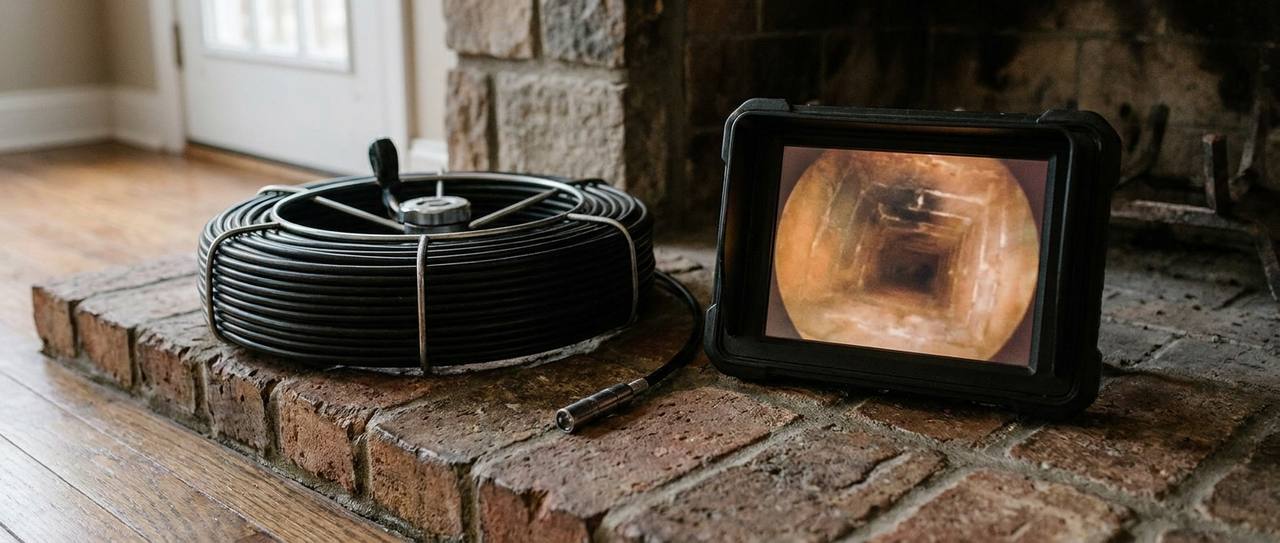
Buying or Selling a Home? Get the Level 2 Before You Sign
This is the inspection that saves five-figure surprises. Over half of New Castle County's housing was built before 1980, and the chimneys in it have had decades to develop cracked flue tiles, gapped mortar joints, deteriorated smoke chambers, and quiet evidence of past chimney fires — none of it visible from the yard, all of it visible to a camera. A general home inspection does not include a flue scan; NFPA 211 exists precisely because "the home inspector looked at it" has preceded a lot of house fires.
For buyers, a Level 2 report turns an unknown into a line item — either peace of mind or a documented repair to negotiate with. For sellers, inspecting before listing means no surprise at the eleventh hour of closing, when a buyer's inspector finds a flue problem and your leverage is gone. For agents, a same-week camera inspection with a written, photo-documented report keeps deals moving. Delaware real estate doesn't wait, and neither does the schedule.
What the Inspection Report Gives You
Findings in writing, photos of anything worth photographing, a plain-English explanation of what's urgent and what's cosmetic, and — where repairs are needed — a firm price to do them. The report separates "this chimney needs a liner before the next fire" from "watch this crown crack and reseal it next summer." That distinction is the whole value of an honest inspection, and it's the difference between maintenance and a sales pitch.
When the Standard Says to Inspect
- Annually — every chimney, every year, regardless of fuel.
- At every home sale or transfer — Level 2 with camera scan.
- After a chimney fire, storm strike, or anything that hit the stack — before the next fire, not after.
- When the appliance changes — new insert, new furnace, wood-to-gas conversion: the flue must match the appliance venting into it.
- After years of sitting unused — a dormant flue collects nests, debris, and moisture damage in silence.