Chimney Relining: The Fix for a Failed Flue
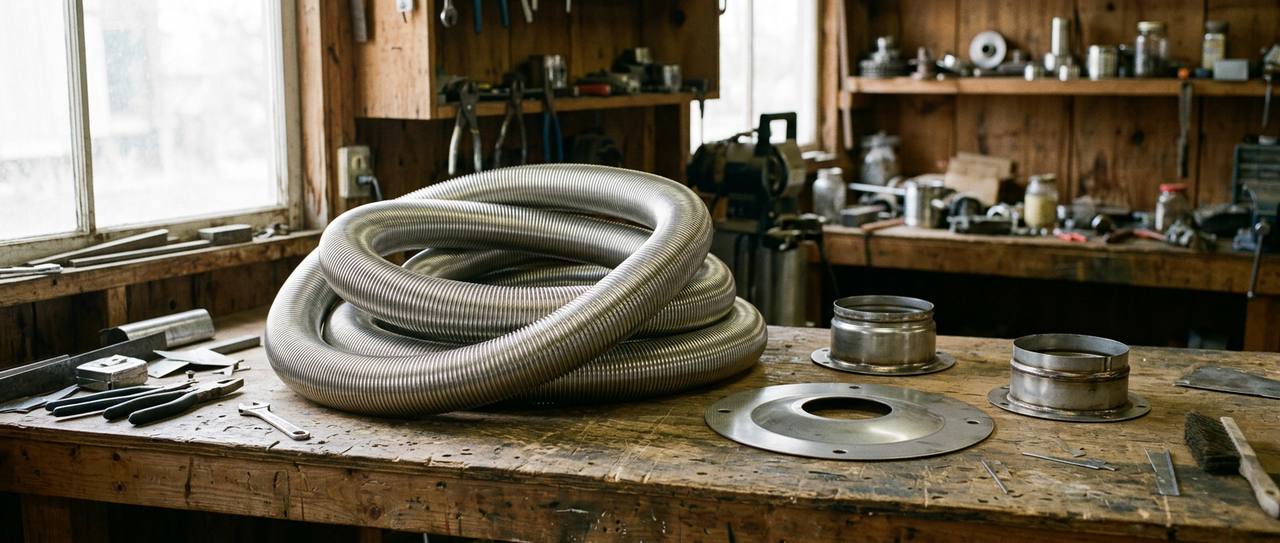
The liner is the part of the chimney that actually does the job — a continuous, sealed passage that carries flame-hot exhaust and carbon monoxide from the appliance to the open air without letting either touch your house. When the liner fails, the chimney is failed, no matter how good the brick looks from the driveway. Relining with stainless steel is the modern standard fix: a continuous stainless flue, sized to the appliance and insulated where the standard requires it, installed down the existing masonry without rebuilding anything you can see.
Why New Castle County Flues Fail
- Clay tiles crack. Most 20th-century chimneys are lined with terra-cotta flue tiles. Thermal shock, settling, water, and time crack them; every crack and gapped joint is a path for heat and gas to leave the flue.
- Pre-war flues were often never lined. Bare-brick flues were standard practice in the rowhome era. Mortar joints exposed to a century of flue gases erode from the inside — invisible until a camera goes down.
- Coal-to-gas conversions. Thousands of Wilmington-area chimneys were built for coal and later repointed at oil or gas equipment. The old flue is routinely the wrong size and the wrong material for the appliance now venting into it.
- Chimney fires. Even a brief one can shatter tiles down the length of the flue. NFPA 211 calls for inspection before the chimney is used again — and fire-cracked tile means relining.
- Modern appliances, old flues. High-efficiency furnaces vent cool, moist exhaust that condenses inside oversized masonry flues and eats them chemically. The white staining on old chimney brick is often this process visible from outside.
What an Installation Involves
The flue is measured and scanned, the liner is sized to the appliance — sizing is the actual engineering here; an oversized flue drafts as badly as an undersized one — then the stainless liner goes down the chimney, gets insulated as required, and is connected at the appliance and terminated with a proper top plate and cap. Most single-flue installations are done in a day. You end with a flue that meets current standards, drafts the way the appliance was designed for, and typically carries a lifetime manufacturer warranty on the stainless itself.
The Honest Economics
Relining is real money — it's the biggest single ticket in routine chimney work. It is also the fix that ends the problem, versus resealing symptoms annually on a flue that's structurally done. If an inspection says your liner has failed, get the finding with photos, get the price in writing, and weigh it against what the fireplace, stove, or furnace is worth to the house. A dead flue doesn't get better, but it will wait patiently while you get a second opinion — and you should feel free to.